

Prerequisites
- Iru/Kandji admin access
- Enrollment key from Runlayer
- At least one Blueprint configured with enrolled devices
- The signed Runlayer CLI macOS package deployed to target devices
Creating an Enrollment Key
Creating an Enrollment Key
Enrollment keys allow devices to automatically register with Runlayer and obtain API credentials.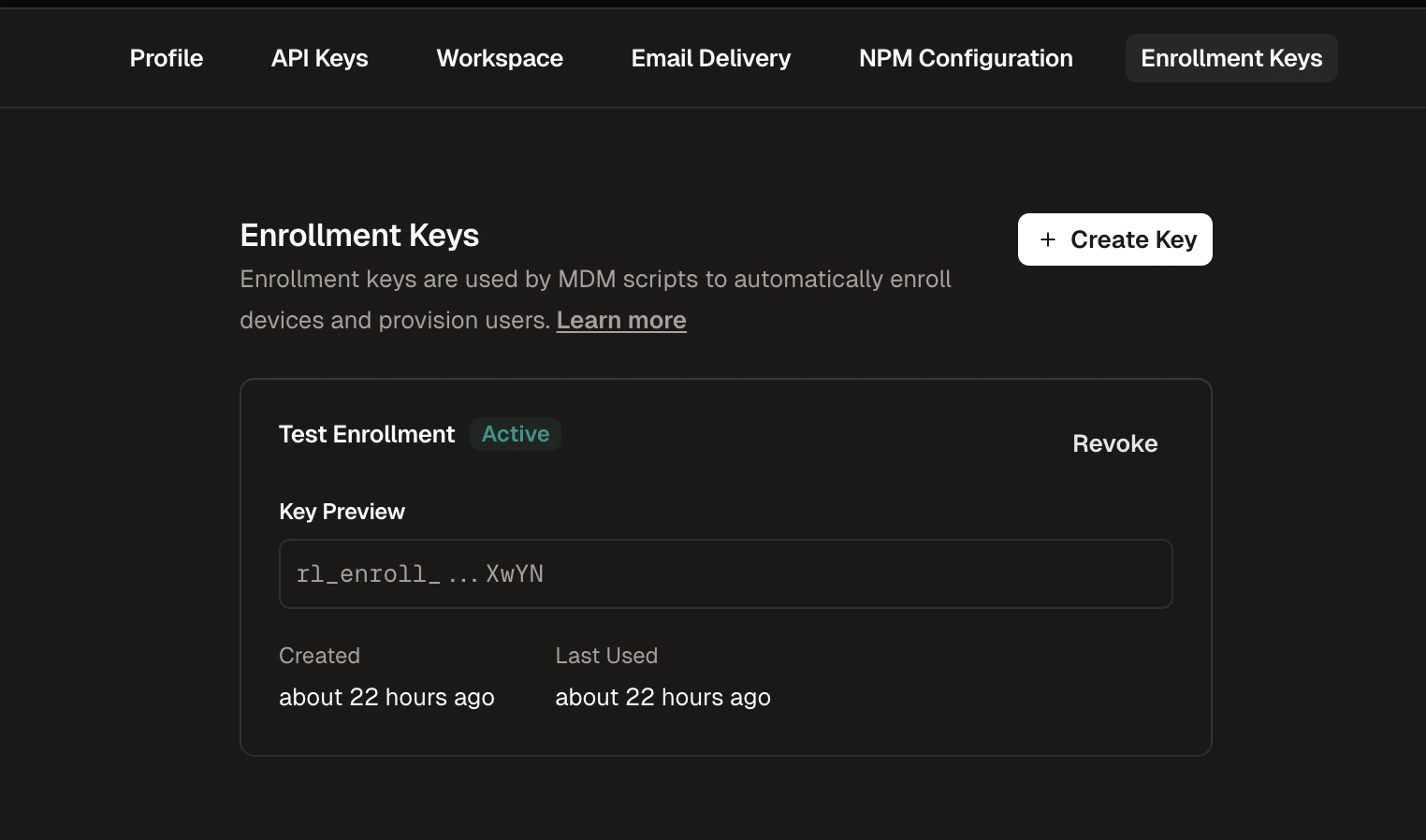
1
Navigate to Enrollment Keys
Go to Settings in the Runlayer dashboard and select the Enrollment Keys tab
2
Create a New Key
Click + Create Enrollment Key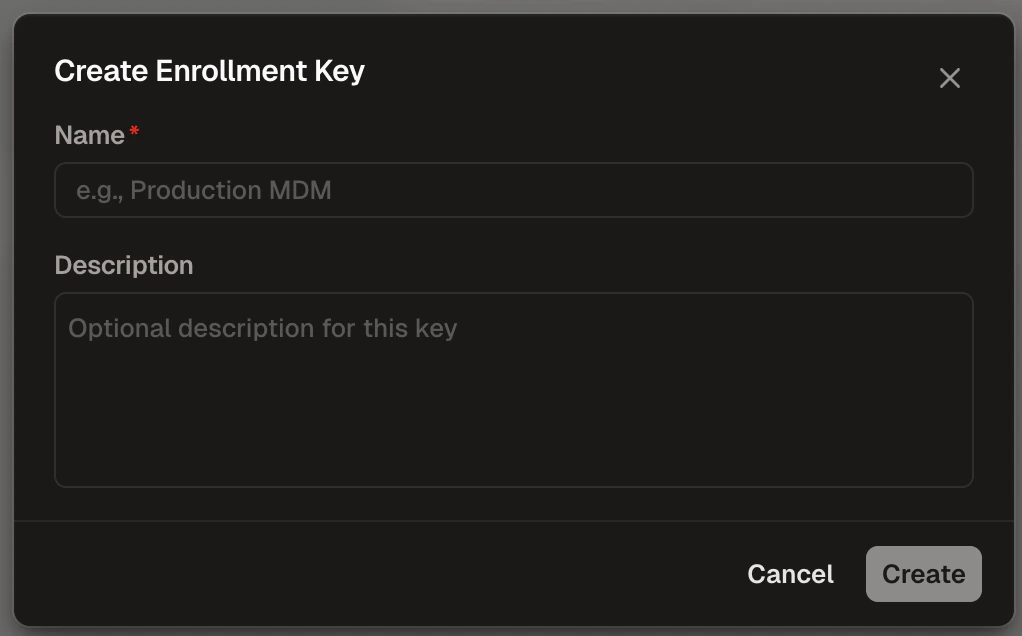
3
Configure the Key
- Name (required): Enter a descriptive name (e.g., “Production MDM”)
- Description (optional): Add context about the key’s purpose
4
Copy the Key
Copy the generated key (starts with 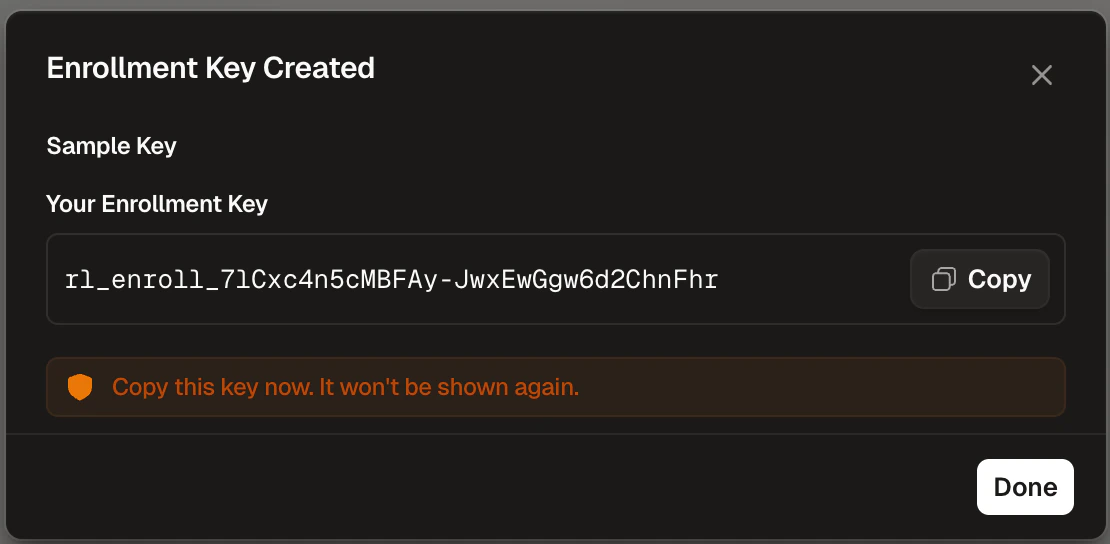
rl_enroll_) and store it securelyDeployment Steps
1
Generate the Script
Fill in your settings below to generate a deployment script.Iru/Kandji-specific configuration tips:
ENROLLMENT_USERNAME: Use an Iru/Kandji variable for the user’s identity if available. Leave empty to use the device username.ENROLLMENT_DEVICE_NAME: Use an Iru/Kandji variable for the device name. Leave empty to use the computer name.
2
Add a Custom Script Library Item
- Navigate to the Library section in Iru/Kandji
- Click Add New → Custom Script → Add & Configure
- Provide a Name (e.g., “Runlayer Config Sync”)
- Assign to your target Blueprint(s)
- Set Execution Frequency to Run daily (recommended) or Run every 15 minutes for more frequent syncs
- Paste the generated script into the Audit Script field
- Click Save
Verification
Open a client application (e.g., Cursor) on a target device and confirm the synced MCP servers appear. Check the Custom Script’s Status tab in Iru/Kandji for execution results. If something went wrong, check/var/log/runlayer/auto_provisioning.log on the device.
You can force an immediate check-in on a test Mac by running sudo kandji checkin in Terminal.